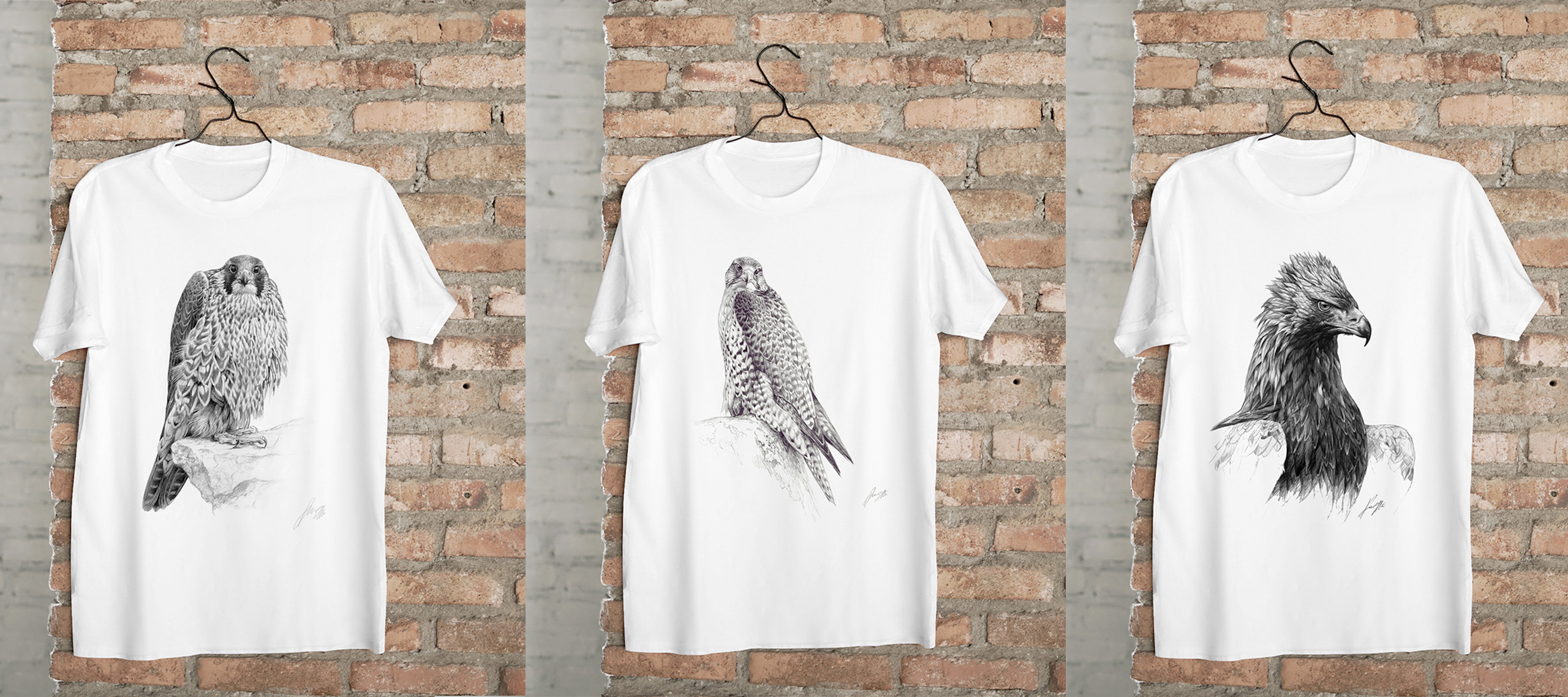
The peregrine falcon, scientifically known as Falco peregrinus, is a majestic and powerful bird of prey that is found throughout much of the world. They are widely regarded as one of the fastest and most agile birds, and their incredible hunting skills have made them a popular subject for birdwatchers and falconers alike.
Physical Characteristics: Peregrine falcons are medium-sized birds, typically measuring between 34-58cm in length and weighing around 600-1400g. They have a distinctive and striking appearance, with a dark head and back, white underside with black spots or bars, and yellow or orange eyes. Their wings are long and pointed, designed for speed and agility, and they have powerful, sharp talons for catching prey.
Habitat and Distribution: Peregrine falcons are found on every continent except Antarctica, with the exception of some Pacific islands. They are highly adaptable birds that can thrive in a wide range of habitats, from open grasslands and deserts to mountain ranges and coastal cliffs. In North America, they typically breed in the tundra and boreal forest regions of Canada and Alaska, and migrate south for the winter.
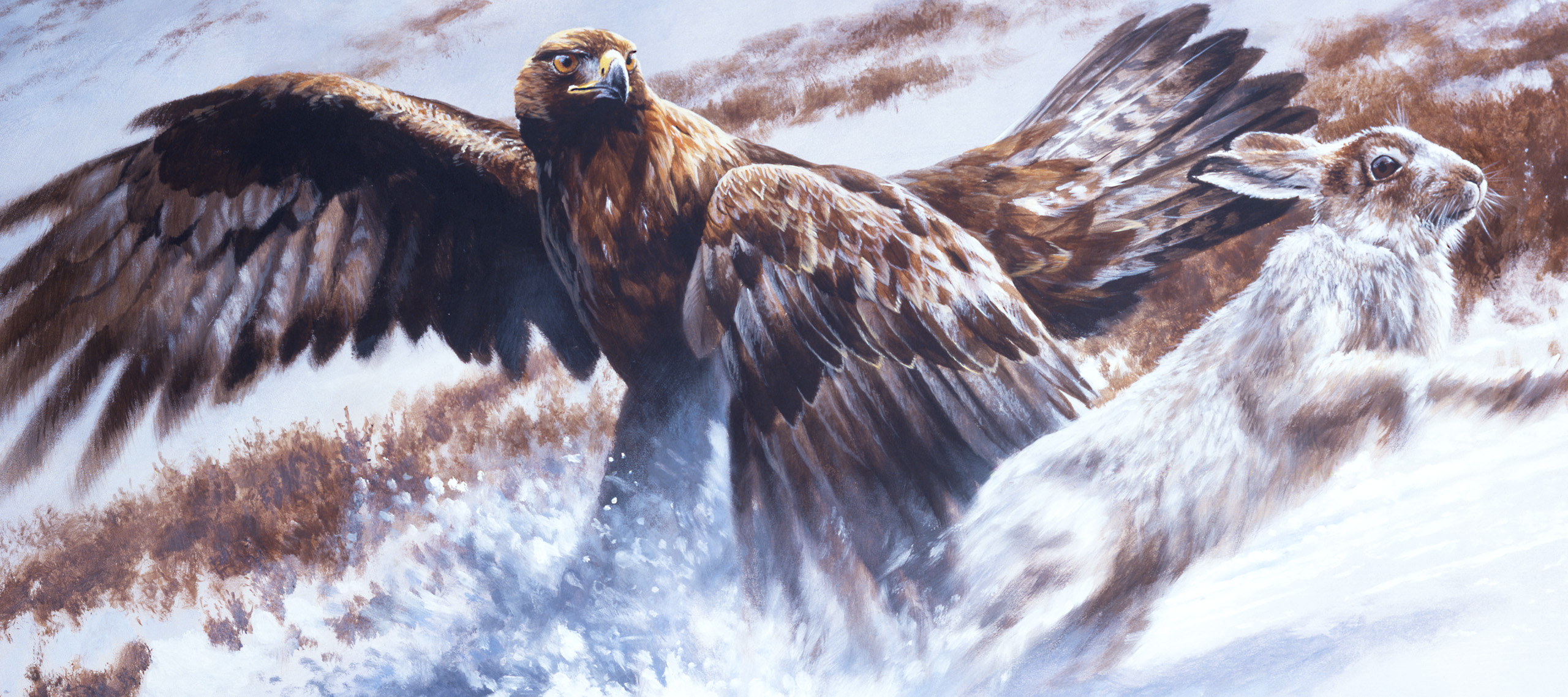
Diet and Hunting: Peregrine falcons are opportunistic hunters, preying on a wide variety of birds and small mammals. Their primary food sources are other birds, such as pigeons, doves, and waterfowl, which they catch in mid-air using their impressive speed and maneuverability. They can dive at speeds of up to 240 mph (386 km/h), making them the fastest birds in the world.
Breeding and Nesting: Peregrine falcons are monogamous birds that typically mate for life. They begin breeding in the spring, with the female laying 2-4 eggs in a well-concealed nest on a cliff ledge or in a tall building. The eggs hatch after around 33-35 days, and the young birds fledge after about 40-45 days. Peregrine falcons can live up to 15-20 years in the wild.
Conservation Status: Peregrine falcons have faced significant threats in the past, primarily due to habitat loss and the use of pesticides such as DDT, which caused the thinning of eggshells and reproductive failure. However, conservation efforts such as the banning of DDT and captive breeding programs have helped to increase their populations. Today, peregrine falcons are classified as a species of “Least Concern” by the International Union for Conservation of Nature (IUCN), with healthy populations found in many regions of the world.
Conclusion: The peregrine falcon is a remarkable bird that has captivated people for centuries with its speed, agility, and impressive hunting skills. With a wide range of habitats and a diverse diet, they are one of the most adaptable and successful birds of prey in the world. While they have faced significant threats in the past, conservation efforts have helped to stabilize their populations, and they continue to be an important part of many ecosystems around the world.
-
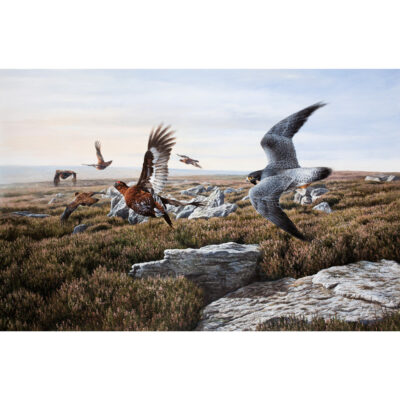 Twist or Fold – Peregrine Chasing Grouse£185.00
-
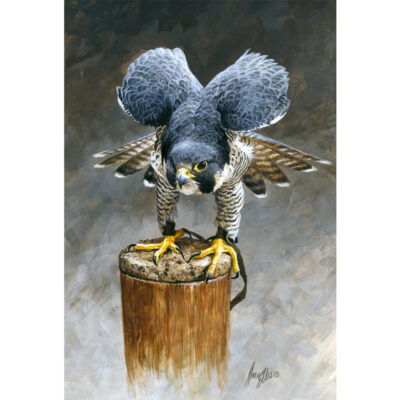 Peregrine StretchingPrice range: £85.00 through £100.00
You save -
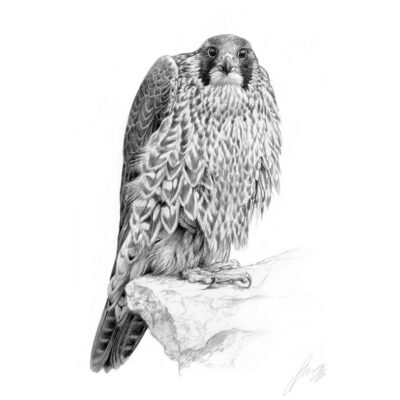 Peregrine Sketch£85.00