Partridges are a group of game birds that belong to the family Phasianidae, which includes pheasants, quails, and grouse. There are over 50 species of partridges, which are found in various parts of the world, including Europe, Asia, Africa, and North America. These birds are known for their delicious meat, and are popular game birds that are hunted for sport.
The most common species of partridge is the grey partridge, also known as the Hungarian partridge. This species is found throughout Europe and Asia, and has also been introduced to North America. Gray partridges are medium-sized birds, with a plump body, short neck, and rounded wings. They have a distinctive reddish-brown coloration, with grey feathers on their breast and sides, and a white belly.
Partridges are known for their social behavior, and are often found in large groups, known as coveys. These groups can range from just a few birds to over 20, and are made up of both males and females. Partridges are monogamous, and mate for life. During the breeding season, males will engage in courtship displays, which involve puffing up their feathers, fanning their tails, and making various calls and noises.
Partridges are ground-dwelling birds, and are typically found in open grasslands, agricultural fields, and other areas with low vegetation. They feed on a variety of seeds, fruits, and insects, and will also eat small rodents and reptiles. Partridges are primarily active during the day, and will roost in trees or bushes at night for protection from predators.
In addition to being hunted for sport, partridges are also raised on farms for their meat. Partridge meat is considered a delicacy in many parts of the world, and is prized for its rich, gamey flavor. The meat is lean and high in protein, and can be cooked in a variety of ways, including roasting, grilling, and stewing.
Unfortunately, some species of partridges are threatened by habitat loss and other factors. Many species are facing declining populations due to the loss of their natural habitat, which is being destroyed by human activity. Climate change is also affecting the distribution and abundance of partridges, as changes in temperature and rainfall patterns can have a significant impact on their food sources and breeding success.
Conservation efforts are underway to protect and conserve partridge species, and to ensure that they continue to thrive in the wild. These efforts include habitat restoration, captive breeding programs, and hunting regulations that aim to maintain sustainable populations of partridges.
In conclusion, partridges are a group of game birds that are known for their social behavior, delicious meat, and distinctive coloration. These birds play an important role in the ecosystems where they live, and efforts must be made to protect and conserve them for future generations. By promoting sustainable hunting practices and protecting their natural habitat, we can help to ensure that partridges continue to thrive in the wild.
-
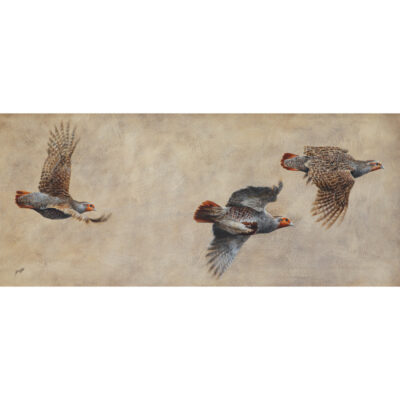 Partridge Flurry£240.00
You save -
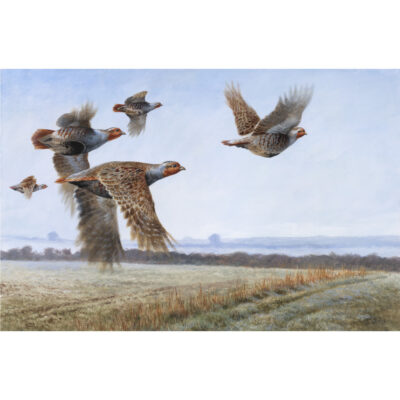 English Partridges in Flight£185.00
