The barn owl, scientifically known as Tyto alba, is a bird of prey that is found throughout much of the world. It is known for its distinctive appearance, including its heart-shaped facial disc, pale plumage, and long wings and tail.
One of the most striking features of the barn owl is its facial disc. This heart-shaped structure surrounds the owl’s eyes and serves to collect and amplify sound, allowing the owl to locate prey in the dark. The disc is made up of tiny feathers that are arranged in a circular pattern, giving it a unique appearance that is instantly recognizable.
Barn owls have a wide range of plumage colors, but they are typically pale and mottled, with a mix of browns, grays, and whites. This coloration serves as effective camouflage against tree bark and other natural backgrounds, allowing the owl to blend in and avoid detection.
These birds are nocturnal hunters and feed primarily on small rodents such as mice, voles, and shrews. They are able to fly silently, thanks to the specialized structure of their feathers, which allows them to reduce the noise of their wing beats. This stealthy flight, combined with their keen hearing and sharp eyesight, makes them highly effective predators.
Barn owls are found in a wide range of habitats, from grasslands and forests to deserts and marshes. They are also well adapted to living in human-dominated environments, such as farmland and suburban areas. However, their populations have declined in some regions due to habitat loss, pesticide use, and other threats.
Despite these challenges, there are many conservation efforts underway to protect the barn owl and its habitat. For example, some farmers are installing owl boxes in their fields to encourage barn owls to nest and hunt on their land. Additionally, scientists are studying the genetics of barn owl populations to better understand their ecology and conservation needs.
Overall, the barn owl is a fascinating and beautiful bird that plays an important role in many ecosystems. Its unique adaptations and hunting strategies make it a valuable subject of study for scientists, while its presence in the wild is a welcome sight for nature lovers and bird watchers.
-
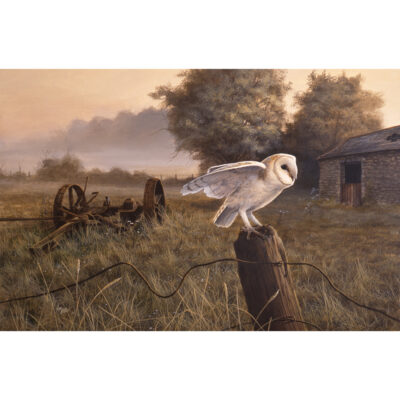 Bygone Days – Barn Owl at Twilight£140.00
-
 Bygone Days A5 Card£2.85
You save